

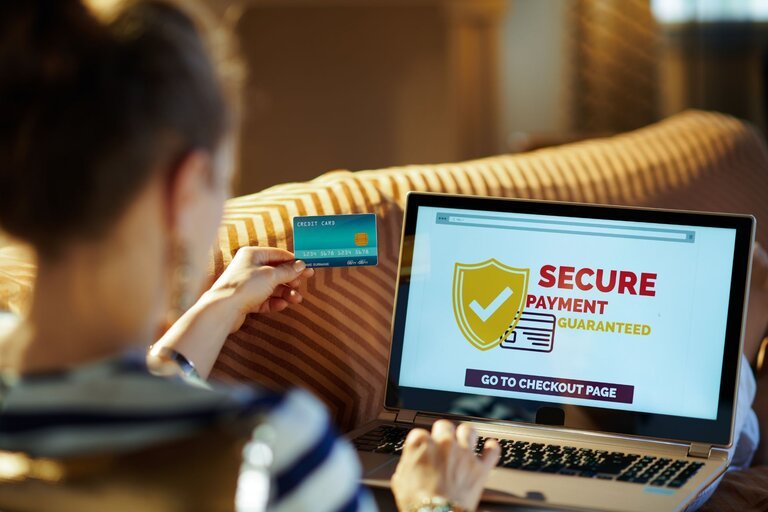
Digital payments have changed the way people pay for goods and services. These days, all you need is a smartphone to send money, shop online, pay bills, and even send money to other countries.
But a lot of people still want to know something important:
How safe are payments made over the Internet?
It’s more important than ever to know how safe digital payments are because cybercrime and online fraud are on the rise.
This guide will tell you how safe digital payments are, what security technologies protect users, and how to stay safe when you shop online.
What Are Payments Made on the Internet?
Digital payments are any online money transfers that don’t use real cash.
Here are some examples:
- Payments made with credit and debit cards
- Mobile wallets include Apple Pay and Google Pay
- Moving money between online banks
- Payments that don’t require contact
- QR codes for payments
- PayPal and Stripe are two examples of payment processors
People all over the world now use digital payments because they are fast, simple, and work.
Are payments made online safe?
The short answer is:
✅ Yes, digital payments are usually very safe.
Most digital payment systems use the latest technology and have several layers of security.
Banks, fintech companies, and payment gateways spend a lot of money on cybersecurity to stop fraud and unauthorized access.
But, like any other online system, there are risks if people aren’t careful.
How to Protect Your Online Payments
Let’s take a look at the main security technologies that protect digital payments.
- Technology for encrypting
Encryption is one of the best ways to keep digital transactions safe.
It changes private information, like credit card numbers, into codes that can’t be read.
✅ Even if hackers get their hands on the data, they won’t be able to understand it.
Most ways to pay are:
- SSL encryption
- Encryption from beginning to end
That’s why URLs for safe websites have “HTTPS” in them.
- Making tokens
Tokenization is used by a lot of mobile wallets.
The system makes a unique digital token instead of giving out your real card number.
Example:
- A random token code takes the place of your card number
- ✅ Your real card information is never shown
Tokenization is a big part of how Apple Pay and Google Pay work.
- Authentication with Two Factors (2FA)
Two-factor authentication is an extra step to protect your data.
To finish a payment, you might need:
- Password + OTP
- PIN and fingerprint
- Face ID and confirmation
Even if someone knows your password, they still can’t get into your account easily.
- Biometrics for safety
Biometrics are used in digital payment apps today, such as:
- Scanning fingerprints
- Knowing who people are
- Check your voice
This makes sure that only the account’s real owner can approve payments.
Using biometrics to pay with a credit card is safer than paying with cash.
- Ways to find fraud
Banks and payment platforms use AI to find strange behavior.
Fraud systems watch out for:
- Spending that isn’t normal
- Places that aren’t well-known
- Big, sudden deals
- Several failed attempts to sign in
If fraud has taken place:
✅ The deal is put on hold right away.
- Safe Ways to Pay
It’s safe to make payments online through gateways like PayPal and Stripe because of:
- Following PCI-DSS
- Strong encryption
- Things that stop fraud
These gateways make sure that the customer’s money gets to the merchant safely.
- How safe are contactless payments?
For NFC payments and contactless cards to work, they have to be very close together (1–2 inches).
They also use encrypted communication, which makes it hard for thieves to steal from them from a distance.
People think that contactless payments are very safe for everyday use.
Common risks that come with digital payments
Even though systems are safe, users may still be in danger of:
- Phishing Scams
Scammers might send you emails or messages that look like they’re from banks.
They get people to share:
- Password
- OTPs
- Details about the card
✅ Before you click on a link, always check it.
- Passwords that aren’t strong enough
Hackers can get into accounts more easily when passwords are easy to guess.
Examples:
- “123456”
- “password”
Use passwords that are hard to guess and have numbers and symbols.
- Dangers of using public Wi-Fi
Making payments over public Wi-Fi is risky.
Hackers can stop connections that aren’t safe.
✅ When you pay, use mobile data or networks you trust.
- Websites that act like they are selling things
Some fake websites want your credit card number.
✅ Always shop at sites that use HTTPS and are safe.
- Things that are lost or stolen
If someone steals your phone and doesn’t lock it properly, they could get into payment apps on it.
Use:
- Biometric security
- Locks on your screen
The best ways to keep digital payments safe
Here are some important safety tips:
✅ Enable 2FA on all payment apps
✅ Don’t give anyone your OTP or PIN
✅ Use only apps and websites that you can trust
✅ Don’t pay for things while using public Wi-Fi
✅ Look at your bank statements often
✅ Update your mobile apps regularly
✅ Tell someone right away if you see anything strange
Your risk goes down a lot if you do these things.
Are cash or digital payments safer?
Digital payments are usually safer than cash because:
- Accounts can be blocked
- Fraud alerts are available
- Transactions can be tracked
- Cash cannot be recovered once stolen
Digital payments are usually safer than cash because people can see what happened and talk about it.
The Future of Safe Digital Payments
Every year, new technologies improve security, like:
- AI helps stop fraud
- Payments made using blockchain
- Authentication that only uses biological data
- Seeing payments happen in real time
Digital payment systems will be even safer and more reliable in the future.
Questions and Answers About Digital Payment Security
Q1: Can hackers get into digital payments?
Yes, but it doesn’t happen very often because of fraud protection and encryption.
Q2: Are mobile wallets safer than credit cards?
Yes, mobile wallets are safer because they use biometric security and tokenization.
Q3: What do I do if I get scammed?
Call your bank right away, block your card, and let them know about the transaction.
Q4: Is it safe for people who are new to the internet to pay online?
Yes, as long as you follow some basic safety rules.
Final Thoughts
Digital payments are very safe thanks to new technologies like:
✅ encryption
✅ tokenization
✅ biometrics
✅ fraud detection
But it’s just as important for users to know.
If you use trusted platforms and follow safe practices, you can enjoy the convenience of digital payments without worrying about security risks.
The future is digital payments, and they get safer every day.

