

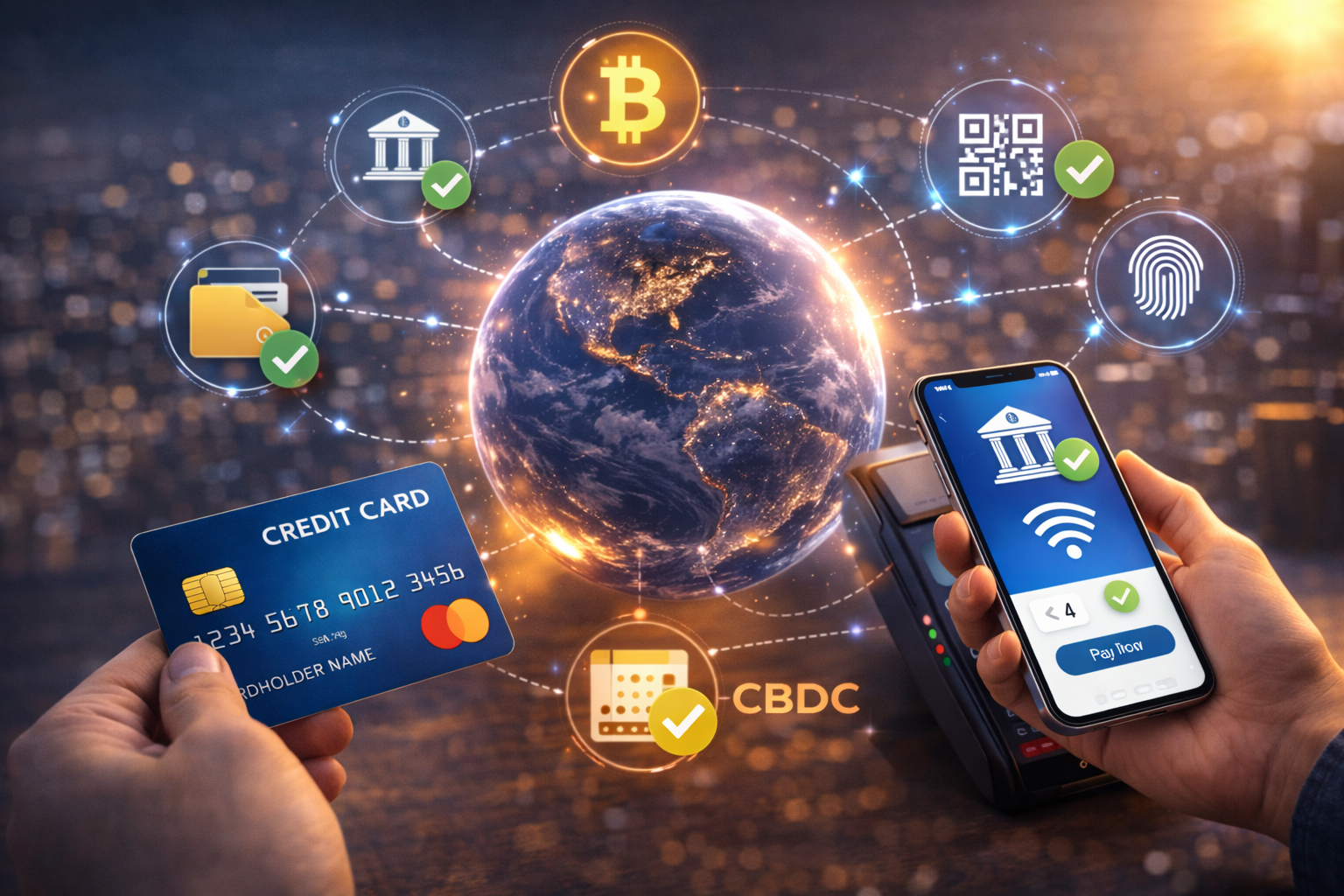
People are quickly changing how they pay for things. Not too long ago, cash was the most common way to pay.
But these days, more people are using:
- Credit and debit cards
- Wallets on phones
- Payments with QR codes
- Transactions without contact
- Transfers of money online
This change has caused a strong trend around the world:
The Future of Payments Without Cash
In this guide, we’ll talk about how cashless payments are changing the future, what they are good for, what problems they may cause, and what the world may look like in the next few years.
What do cashless payments mean?
Cashless payments are transactions that don’t involve real money. Instead, electronic systems move money from one place to another.
Examples:
- Cards for credit and debit
- Mobile wallets like Apple Pay and Google Pay
- PayPal and Stripe are two examples of online payment gateways
- Transfers between banks
- Payments with cryptocurrency
- Tap-to-pay cards that don’t need to be touched
People all over the world are using cashless payments more and more.
Why is the world going toward a society without cash?
There are a number of reasons why cashless transactions are growing:
- Ease and Speed
Handling cash takes a lot longer than making digital payments.
✅ Tap your phone, and the payment is done in seconds.
No need to count cash or wait for change.
This saves businesses and customers time.
- The Rise of E-Commerce
In the last few years, online shopping has grown a lot.
You can buy goods and services right away from anywhere in the world with cashless payments.
Digital payments are necessary for modern e-commerce to work.
- The Mobile Wallet Revolution
Smartphones are now digital wallets.
People can now pay with:
- Pay with Apple
- Pay with Google
- Pay with Samsung
Mobile wallets are safe, quick, and simple.
- More places are accepting contactless payments
One of the best things about banking is that you can pay without touching anything.
People can just tap a card or phone with NFC technology.
✓ Safer
✓ Faster
✅ Cleaner
After the COVID-19 pandemic, this became even more popular.
- Help from the government and banks
Many governments want people to use digital payments to:
- Stop corruption
- Make taxes more open
- Keep an eye on illegal cash activities
- Encourage financial inclusion
Banks are also putting a lot of money into the infrastructure for digital payments.
Important trends that will affect the future of cashless payments
The industry for cashless payments is changing quickly. Here are some important trends:
- The rise of banks that only work online
Digital banks are taking the place of regular bank branches.
People can:
- Create accounts online
- Pay right away
- Use apps to keep track of your spending
This makes it possible to live without cash.
- AI in the Security of Payments
AI is a big part of finding fraud.
Banks use AI for:
- Stopping fraud
- Monitoring transactions in real time
- Scoring risks
This makes people more likely to trust digital payments.
- Payments using biometrics
Payments may not need a card or phone at all in the future.
Biometric verification includes:
- Prints of your fingers
- Recognizing faces
- Scanning the eyes
This makes it easier and safer to do business.
- Payments made with cryptocurrency and blockchain
Cryptocurrencies like Bitcoin and Ethereum are changing the way people will pay in the future.
Blockchain gives us:
- Clear transactions
- Decentralized money
- Payments between countries that go faster
Even though adoption is still growing, crypto could be a part of the future without cash.
- Digital currencies from central banks (CBDCs)
A lot of countries are making their own digital money.
Examples:
- Yuan in Digital Form (China)
- Digital Euro (Plans for the EU)
- Research on the Digital Dollar (USA)
CBDCs could play a big role in economies that don’t use cash in the future.
Advantages of a Future Without Cash
There are many benefits to living in a cashless society:
✅ Less crime and theft
It’s common for thieves to steal cash, but digital transactions are safe and can be traced.
✅ Better tracking of money
People can easily keep track of their spending with cashless payments through apps.
✅ Business moves faster
Businesses can process payments right away and save money on handling cash.
✅ Open to Everyone
It is easier to do business across borders with digital payments.
✅ More people can access money
People who don’t have regular bank accounts can use mobile payments to get financial services.
Problems with Going Completely Cashless
There are some problems, even though there are benefits:
Risks to cybersecurity
Hackers and scammers can go after digital payments.
Encryption that is strong and being aware are very important.
The Digital Divide
Not everyone has a smartphone or access to the internet.
Cash is still important for people who live in rural areas or don’t have a lot of money.
- Worries about privacy
Cash payments are private, but digital payments leave behind records of the transaction.
Some people are worried about:
- Watching by the government
- Using data wrong
- No privacy
- System Breakdowns
Technology is what makes digital payments work.
Cashless systems could be affected if networks go down or power goes out.
Will Cash Ever Go Away?
Most experts think that cash won’t completely go away anytime soon, but it will be used less and less.
A mixed future is likely:
Digital payments are taking over cities, but cash is still available in case of emergencies and in rural areas.
The world is moving toward “less cash” instead of “no cash.”
New Ideas for Cashless Payments in the Future
Technologies that may come out soon are:
- Payments made by voice
- Payment chips for smart wearables
- Quick transactions across borders
- Personal finance systems that use AI
- Payments with fully integrated digital identities
Systems without cash will get smarter, safer, and faster.
Questions and Answers About the Future of Cashless Payments
Q1: Are payments made without cash safer than cash?
Yes, digital payments have encryption, protection against fraud, and the ability to be tracked.
Q2: What countries have the least cash right now?
Countries like Sweden, Norway, and China are at the top of the list for going cashless.
Q3: Will cash go away for good?
Not completely, but it will happen less and less often.
Q4: What is the most important payment trend for the future?
Biometric authentication and central bank digital currencies (CBDCs) are two big trends that are coming up.
Last Thoughts
The future of payments without cash is bright and growing quickly.
Digital transactions are becoming a normal part of life because they are fast, easy, and safe.
There are still problems to solve, but technology, government support, and consumer demand will keep moving the world toward a cashless economy.
Cashless payments aren’t just a fad; they’re the way money will be in the future.

