

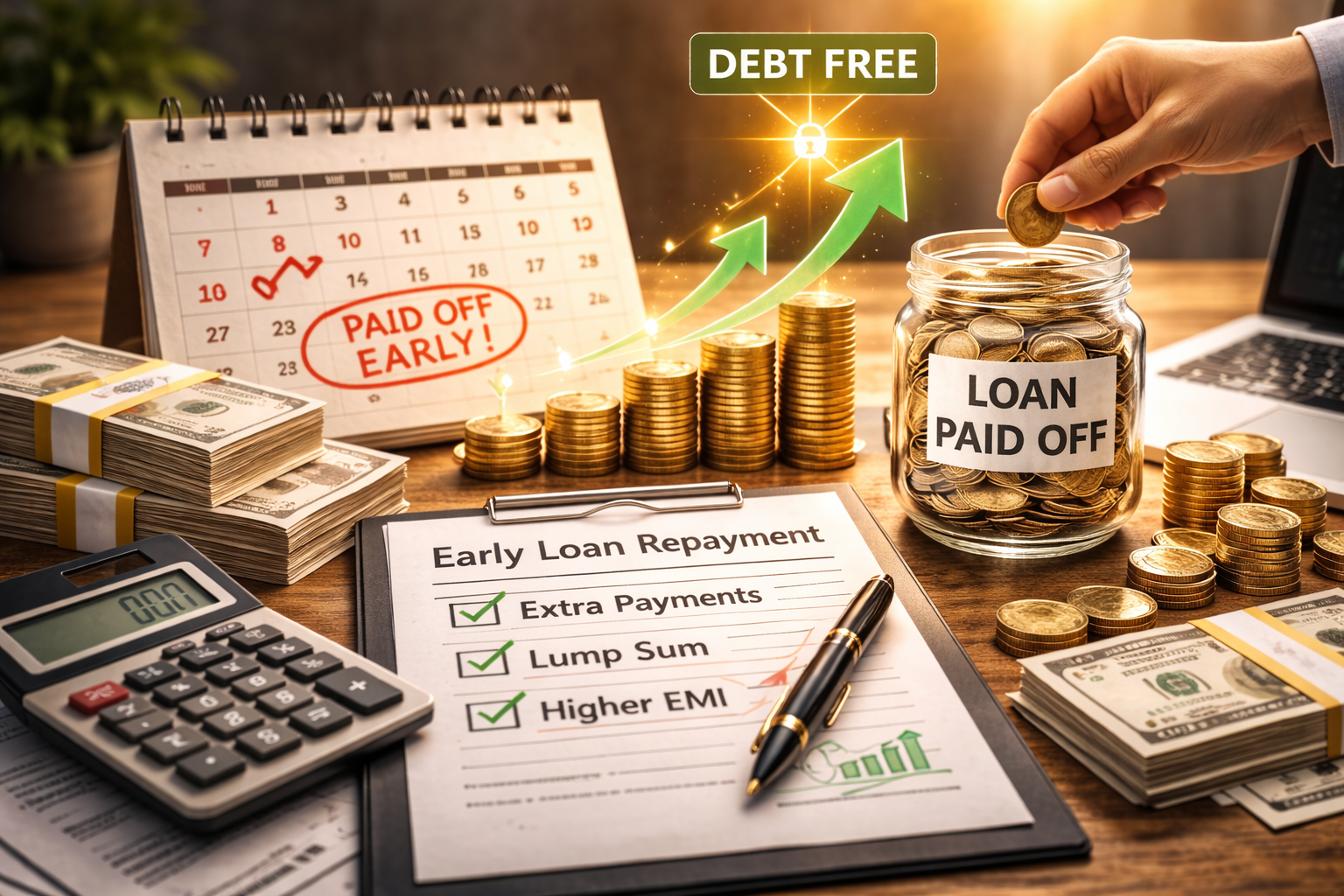
How Paying Back a Loan Early Saves You Money (Beginner-Friendly Guide)
When you take a loan, you don’t just repay what you borrowed — you also pay interest, which is the cost of borrowing.
The longer you take to repay, the more interest you pay.
Paying off your loan early reduces how much interest you pay — sometimes saving thousands of dollars.
Let’s break it down simply.
What Does It Mean to Pay Off a Loan Early?
Paying off a loan early means repaying it before the scheduled end date.
You can do this by:
Paying more than your required monthly EMI
Making extra lump-sum payments
Paying off the entire remaining balance (foreclosure)
When you reduce the loan balance faster, interest is calculated on a smaller amount — which lowers your total cost.
Why Interest Makes Loans Expensive
Every loan payment has two parts:
✅ Principal – The money you borrowed
✅ Interest – The cost charged by the lender
Interest is calculated based on the remaining principal.
The longer the loan runs, the more interest you pay.
For example:
Loan: $20,000
Interest: 12%
Term: 5 years
You could end up paying over $27,000 in total.
That extra $7,000+ is interest.
The Math Behind Loan Payments
Most loans use this EMI formula:
EMI=Pr(1+r)n/((1+r)n−1)EMI = P r (1+r)^n / ((1+r)^n – 1)EMI=Pr(1+r)n/((1+r)n−1)
Where:
P = Loan amount
r = Monthly interest rate
n = Number of months
The key insight:
The larger n (longer loan term), the more total interest you pay.
When you pay early, you reduce n, which reduces total interest dramatically.
Example: How Much You Can Save
Let’s look at a realistic example:
Loan: $50,000
Interest rate: 12%
Term: 10 years
Monthly EMI: About $717
Total paid over 10 years: ~$86,000
Total interest: ~$36,000
Now imagine you repay it in 7 years instead of 10:
Total interest drops significantly
You could save $10,000 or more
That’s real money staying in your pocket.
4 Big Benefits of Paying Off Early
1️⃣ Lower Total Interest
The biggest advantage.
Less time = less interest charged.
2️⃣ Principal Reduces Faster
In early years, most of your EMI goes toward interest — not principal.
Extra payments:
Reduce principal sooner
Lower future interest
Speed up payoff
3️⃣ Shorter Loan Term
Extra payments automatically reduce your loan duration.
You become debt-free faster.
4️⃣ Better Financial Stability
Once debt is gone:
✅ Lower monthly stress
✅ More savings
✅ More investment opportunities
✅ Greater financial freedom
Debt-free living builds long-term wealth.
Smart Ways to Pay Off a Loan Early
✔ Pay Extra Every Month
Even small extra payments make a big difference.
Example:
EMI: $500
Pay $550 instead
That extra $50 reduces principal directly.
✔ Use Bonuses or Windfalls
Good times to make lump-sum payments:
Work bonuses
Tax refunds
Side income
Gifts
✔ Increase EMI When Income Grows
If you get a raise, increase your EMI instead of lifestyle spending.
✔ Foreclose the Loan
Pay off the entire balance at once (if no heavy penalties).
This maximizes interest savings.
Important Things to Check First
⚠ Prepayment or Foreclosure Fees
Some lenders charge penalties.
Always check:
Prepayment charges
Foreclosure fees
Lock-in periods
If penalties are high, savings may reduce.
⚠ Keep an Emergency Fund
Never use all your savings to repay a loan.
Maintain:
3–6 months of expenses
Emergency liquidity
Financial safety comes first.
⚠ Compare with Investment Returns
If:
Loan interest = 8%
Investment return = 12%
It might be smarter to invest instead.
But for high-interest loans (like credit cards), always repay first.
When You Should Definitely Pay Early
✅ High-interest loans (credit cards, personal loans)
✅ No prepayment penalties
✅ Extra cash available
✅ You want peace of mind
High-interest debt should be cleared as fast as possible.
When Early Repayment May Not Be Ideal
Very low interest rate loan
Heavy prepayment penalties
No emergency savings
Better guaranteed investment opportunities
Your financial goals matter.
Frequently Asked Questions
Q1: Does paying early reduce interest?
Yes. Because interest is calculated on the remaining principal over time.
Q2: Do banks charge fees for early repayment?
Some do. Always check loan terms.
Q3: Which loans should I pay first?
Highest interest rate loans first.
Q4: Pay debt or invest?
Compare loan interest vs expected investment return.
High-interest debt usually comes first.
Final Thoughts
Paying off a loan early is one of the smartest financial moves you can make.
The simple rule:
The faster you repay, the less interest you pay.
But always:
Check penalties
Keep an emergency fund
Compare investment opportunities
Align with your long-term goals

