

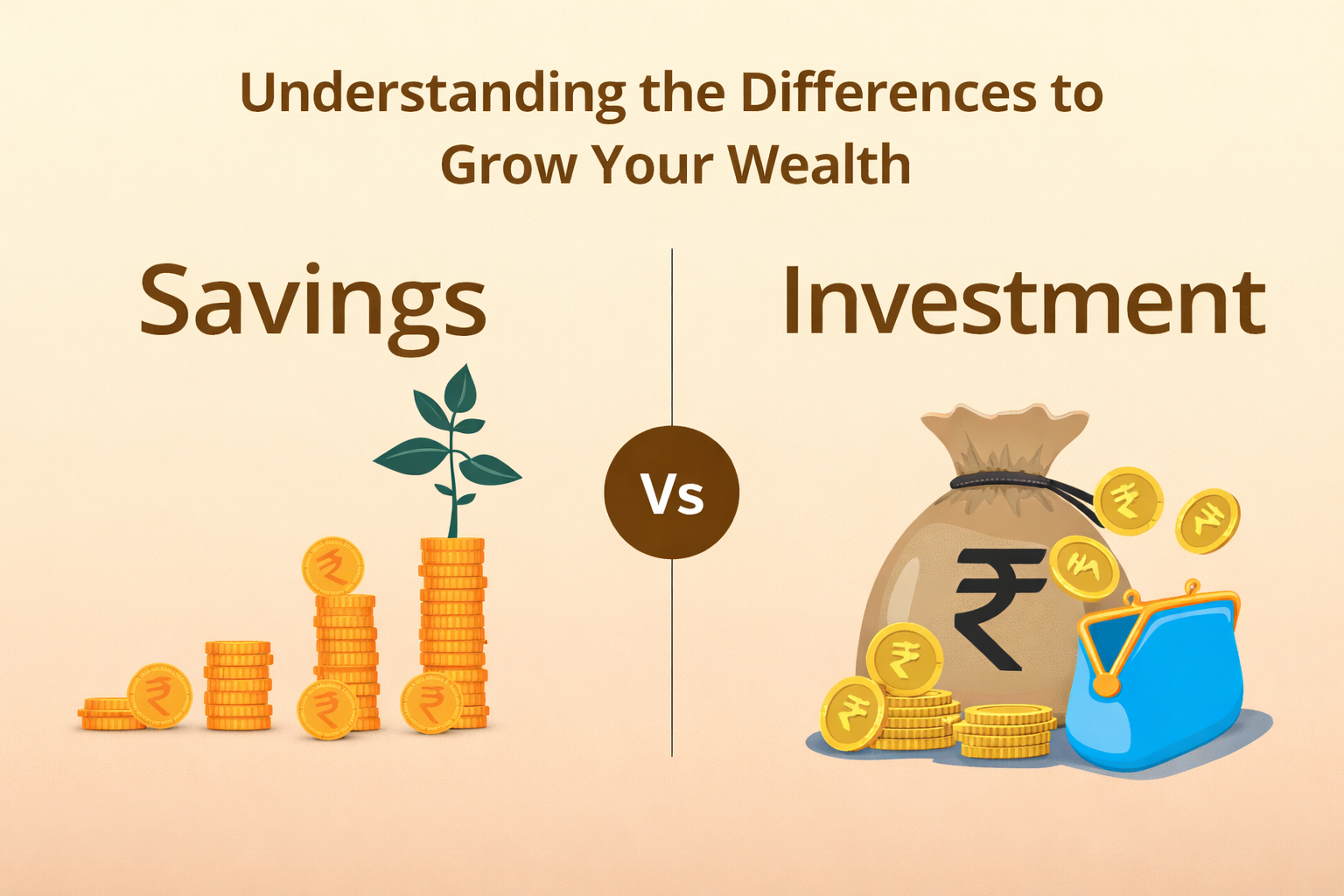
A Full Beginner’s Guide to the Difference Between Saving and Investing
Two of the most common words in personal finance are:
Saving
Investing
Many beginners think these are the same, but they are not. Both are important, but they help build a strong financial future in different ways.
This guide explains the differences clearly and simply.
What Is Saving?
Saving means putting your money away in a safe place where you can access it easily later.
Common ways to save:
Savings accounts at a bank
Short-term fixed deposits
Emergency funds
Main reason to save:
✅ Safety and quick access
Savings help with short-term needs and emergencies.
What Is Investing?
Investing means using your money to buy assets that can grow in value over time.
Common investments:
Stocks
Mutual funds
Index funds
Real estate
Bonds
Retirement accounts
Main reason to invest:
✅ Grow your wealth over time
Investing is a way to increase your money and protect it from inflation.
Main Differences Between Saving and Investing
| Feature | Saving | Investing |
|---|---|---|
| Purpose | Safety and short-term needs | Wealth growth over time |
| Risk | Low | Medium to High |
| Returns | Low | Medium to High |
| Accessibility | Easy to access | Not always liquid |
| Best For | Short-term goals and emergencies | Long-term goals, retirement, inflation protection |
| Inflation Protection | Weak | Stronger |
Key Differences Explained
Goal and Purpose
Saving: Short-term goals, emergency money, safety
Investing: Long-term goals, retirement, wealth growth
Level of Risk
Saving: ✅ Low risk, safe
Investing: ❌ Medium to high risk, value can fluctuate
Returns (Profit Potential)
Saving: Low (2–4% per year)
Investing: Higher (8–10% average long-term returns)
Ease of Access
Saving: Easy to withdraw anytime
Investing: May take time to turn into cash
Time Frame
Saving: Best for 0–3 years
Investing: Best for 5–30 years
Protection Against Inflation
Saving: May lose value over time
Investing: Usually grows faster than inflation
When to Save
You should save when:
✅ You need money right away
✅ You want a safety net
✅ You are building an emergency fund
✅ You want low-risk money
Examples:
Health emergencies
Rent and bills
Short-term goals
When to Invest
You should invest when:
✅ You have long-term goals
✅ You want to build wealth
✅ You can handle market fluctuations
✅ Your emergency fund is ready
Examples:
Retirement planning
Buying a home
Financial freedom
How to Balance Saving and Investing
Put money aside first
Save 3–6 months’ worth of living expenses for emergencies
Pay off high-interest debt
Credit cards and payday loans first
Start investing gradually
Regularly invest small amounts for long-term growth
Rule of thumb:
Save for safety and invest for growth. Both work together to keep your money secure.
Common Beginner Mistakes
❌ Investing without an emergency fund
❌ Keeping all money in savings (loses value over time)
❌ Thinking investing is gambling
❌ Expecting quick profits
❌ Not diversifying investments
FAQs About Saving and Investing
Q1: Should I save or invest first?
Save for emergencies first, then invest for long-term growth.
Q2: Is investing risky for beginners?
Some risk exists, but long-term diversified investments are usually safe.
Q3: Can I save and invest at the same time?
Yes, balance both according to your goals.
Q4: Why isn’t saving enough for long-term goals?
Inflation reduces the value of savings, while investing helps grow money faster.
Final Thoughts
Saving and investing are both essential for managing your money:
Saving keeps you safe and provides financial security
Investing builds wealth over time and beats inflation
Start by:
Setting aside money for emergencies
Investing regularly for long-term growth
Using both wisely ensures a strong and stable financial future.

