

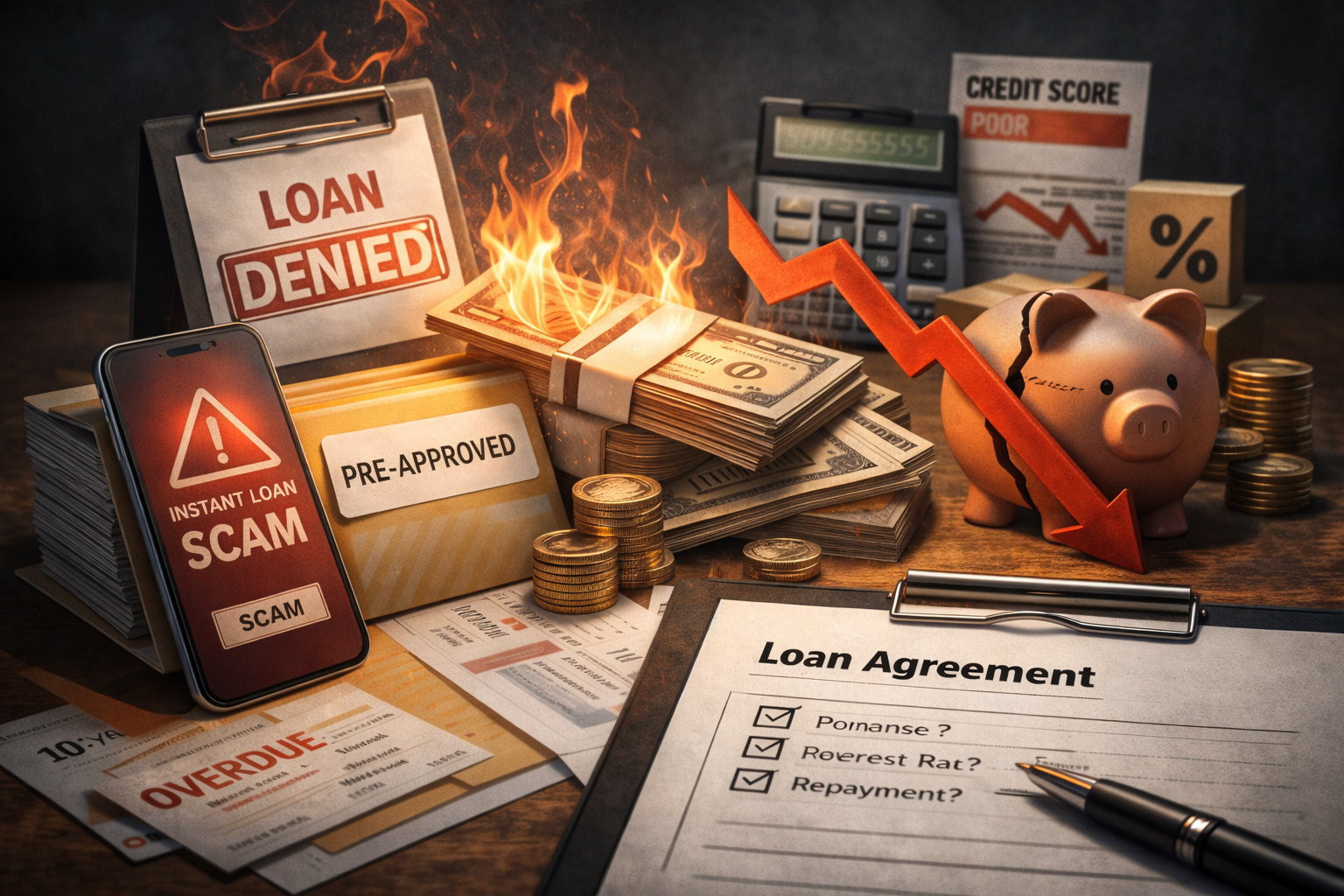
The Truth About Loan Mistakes
A small loan mistake today could cost you a lot of money tomorrow.
This guide will cover the most common loan mistakes and how to avoid them.
Why Mistakes with Loans Cost So Much
Loans are more than just borrowed money; they also come with:
Fees for interest
Fees and fines
Long-term promises to pay back
Mistakes can make things worse:
❌ Total interest paid
❌ Monthly financial burden
❌ Debt stress
❌ Damage to credit score
You can save thousands of dollars by knowing these mistakes before you borrow.
Mistakes People Make When They Borrow Money
Let’s look at the most common mistakes that people make when they borrow money.
1. Taking Out More Than You Need
A lot of people borrow more money than they need because it seems easy.
Example:
You need $5,000 but you borrow $10,000.
This leads to:
More money to pay each month
Higher cost of interest
More debt to pay off
✅ Only borrow what you really need.
2. Not Looking at Different Interest Rates
Different lenders have different interest rates.
Some people who borrow money don’t shop around and just take the first offer.
Over time, even a 2% to 3% difference can cost you thousands.
✅ Always look at loans from more than one bank before making a choice.
3. Not Paying Attention to the APR (Annual Percentage Rate)
A lot of people only think about the interest rate and not the APR.
APR has:
Interest
Fees for processing
Extra fees
A loan with low interest but high fees could end up costing more.
✅ Always look at the APR to find out how much the loan really costs.
4. Picking a Longer Term Just to Get a Lower EMI
A longer repayment term lowers the monthly EMI but raises the total interest.
Example:
$20,000 loan
3-year term: higher EMI but lower interest
7-year term: lower EMI but a lot more interest
Choose the shortest term you can afford without too much trouble.
5. Not Figuring Out EMI Before Borrowing
Some people borrow money without knowing how much they will have to pay back each month.
This could lead to:
Stress from money
Payments that weren’t made
Stress from debt
Before signing any loan agreement, use an EMI calculator.
6. Not Making EMI Payments
One of the most expensive mistakes you can make with a loan is to miss or pay late.
Things that happen as a result are:
Fees for being late
More interest on the penalty
Damage to credit score
In very bad cases, going to court
Set reminders or automatic payments so you never miss an EMI.
7. Getting Loans Without Carefully Reading the Terms
Important terms in loan agreements are:
Fees that aren’t obvious
Fees for paying early
Changes to interest
Rules by default
A lot of people sign without reading.
✅ Before you accept a loan, make sure you understand the terms.
8. Only Paying the Minimum on Your Credit Card Debt
Credit card debt is like a loan with very high interest rates.
If you only pay the minimum, you’ll be in debt for years.
✅ Pay more than the minimum or pay off your balance quickly.
9. Falling for Scams That Promise “Instant Loans”
Some fake lenders say they can:
Approval is guaranteed
No paperwork is needed
Cash right away
These often come with fraud, hidden fees, or illegal actions.
✅ Only borrow money from banks and lenders that are well-known and have a license.
10. Not Checking Your Credit Score Before Applying
Your credit score has a direct effect on:
Getting a loan approved
Rates of interest
Limits on borrowing
If you apply with a low credit score, you’ll either get a higher rate or be turned down.
✅ Before borrowing, check and raise your credit score.
11. Getting More Than One Loan at a Time
Some borrowers are able to handle more than one loan at a time:
A loan for personal use
Debt on credit cards
Loan for a car
Loan for business
This makes it more likely that someone will default.
✅ Work on one loan at a time that you can handle.
12. Not Thinking About Prepayment Options
If you pay back early, some lenders will charge you fees.
Prepayment flexibility is important if you want to pay off your loan faster.
Choose lenders who don’t charge you to pay off your loan early.
13. Using Loans to Pay for Things You Don’t Need
Taking out loans for things you don’t need is risky:
Holidays
Shopping for luxury items
Gadgets that cost a lot
Loans should help people grow their money, not their lifestyle.
✅ Don’t borrow money for things you want.
14. Not Having a Backup Plan for Emergencies
Unforeseen events, like losing a job, can make it hard to pay back an EMI.
Borrowers get deeper into debt when they don’t have savings.
Before you take out a big loan, make sure you have an emergency fund.
15. Not Refinancing When There Are Better Options
Even when lower rates are available, a lot of borrowers stick with high-interest loans.
Refinancing can lower:
✅ EMI
✅ Total interest burden
Always look into refinancing options.
How to Stay Away from Loan Mistakes
Do these smart things:
✅ Only borrow what you need
✅ Compare interest rates and APR
✅ Figure out how much you can afford to pay each month
✅ Choose the right loan term
✅ Make sure you pay your installments on time
✅ Read the loan agreement carefully
✅ Keep your credit score high
✅ Don’t take out loans you don’t need
✅ Keep emergency savings ready
Smart borrowing helps you save money and feel less stressed.
Questions and Answers About Loan Mistakes
Q1: What is the most common mistake people make when taking out a loan?
Taking out more money than you can pay back.
Q2: Does a longer loan term save you money?
No. It lowers the EMI but raises the total interest.
Q3: Do missed payments hurt your credit score?
Yes. Late EMIs can really hurt your credit history.
Q4: Is it okay to borrow money for luxury items?
No. You should only take out loans for things you need or to help your business grow.
Last Thoughts
Loans can help you reach important goals, but if you make a mistake, they can cost you a lot of money. To borrow wisely, you need to be careful, disciplined, and well-informed.
Keep this in mind:
✅ Smart borrowing helps you stay financially stable
❌ Careless borrowing puts you in long-term debt traps
Before you take out a loan, always read the terms, figure out how much you can afford, and make a plan for how you will pay it back.

