

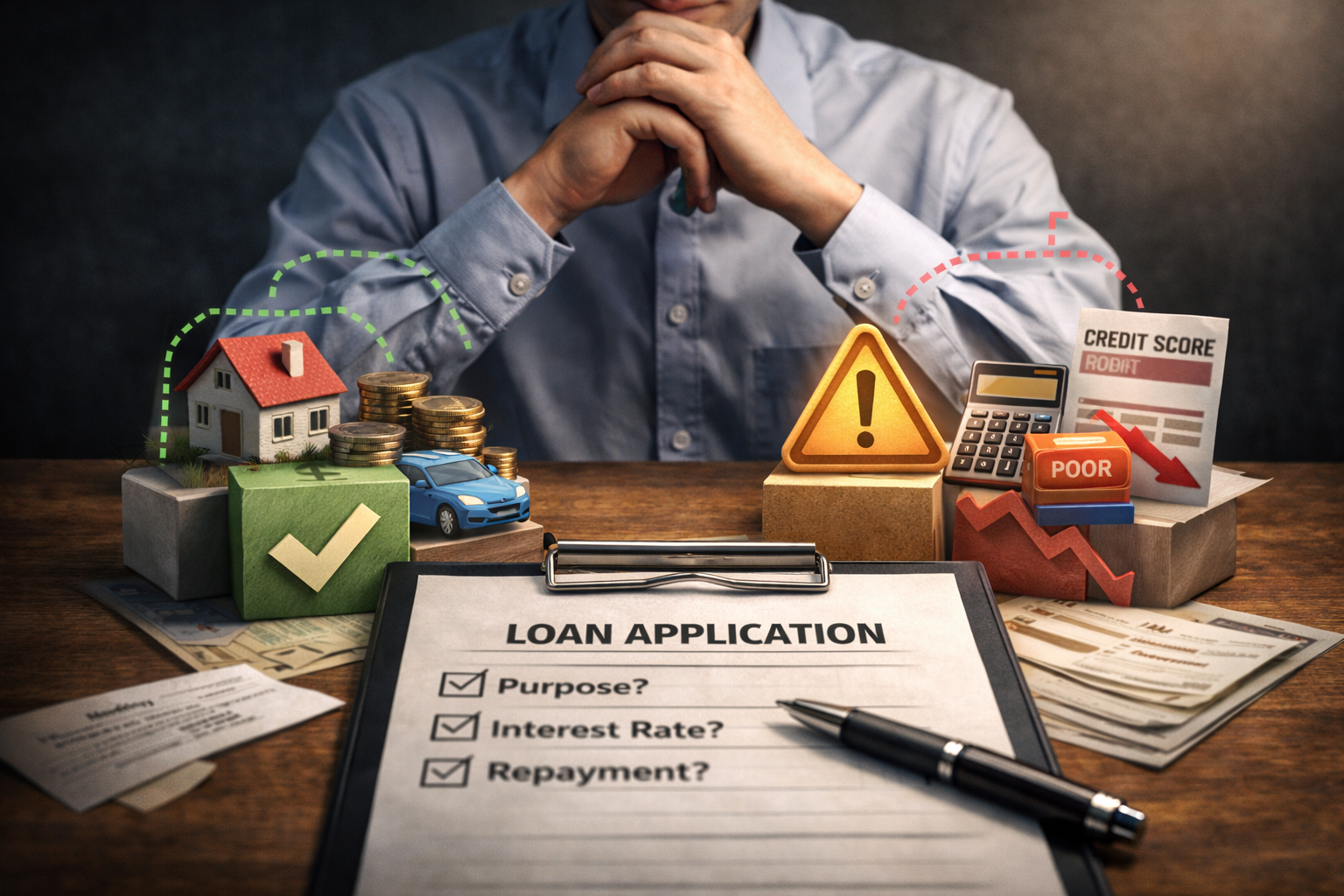
A Beginner’s Guide to Things to Think About Before Getting a Loan
If you use it right, a loan can help you keep track of your money. People take out loans to buy a car, a house, pay for medical emergencies, or start a business.
But borrowing without a good plan can lead to:
- Debt with a lot of interest
- Worrying about money
- Payments that weren’t made
- Hurt your credit score
That’s why it’s very important to know:
Before you get a loan, here are some things to think about
This guide will talk about the most important things that anyone who wants to borrow money should think about before they apply for a loan.
Why You Should Look Over Loan Details
A loan is not free money. You have to pay it back.
You have to pay interest and pay back the money, so it’s a long-term commitment.
Reading the terms of a loan carefully helps you:
✅ Don’t get into debt you don’t need to be in
✅ Choose repayment plans that are easy on your wallet
✅ Pay less interest
✅ Protect your financial future
Things to Think About Before Getting a Loan
Let’s talk about each of the most important points one at a time.
- Understand why you need the money
Think about this before you borrow:
- Do you really need this money?
- Is it for a luxury or an emergency?
- Can I wait to buy and save instead?
You should only borrow money for things you really need, not things you want right away.
Don’t borrow money just because you feel bad.
- Find out if you can pay it back
The most common mistake people make is borrowing more money than they can afford to pay back.
Always find out:
- Monthly income
- Costs each month
- Saving
- Debts right now
A good rule is:
Your EMI shouldn’t be more than 30% to 40% of your monthly income.
Paying back in a way that is easy on the wallet keeps stress at bay.
- When comparing interest rates, be careful
The loan’s cost is based on the interest rate.
A small change is still important.
Example:
- The loan amount is $20,000
- 10% interest means it’s cheaper
- 15% interest means a much higher total repayment
Always compare loan offers from more than one lender.
- Understand what the APR (Annual Percentage Rate) is
APR includes:
- Rate of interest
- Fees for processing
- More fees
APR shows you the real cost of borrowing money.
Look at the APR as well as the advertised interest rate.
- Look at the Loan Tenure (Repayment Term)
The loan term is the amount of time you have to pay it back.
Examples:
- One year
- Five years
- Twenty years
More time:
- Less EMI
- More interest overall
Less time:
✅ Less overall interest
❌ More EMI
Choose a balance that fits your budget.
- Before you borrow, know your EMI
You should always know how much your monthly payment will be.
The EMI is based on:
- How much is the loan?
- Interest rate
- Tenure
Use an EMI calculator online to figure out exactly how much you need to pay.
You should never take out a loan without knowing how much you will have to pay each month.
- Look for fees and charges that aren’t obvious
Some loans have extra fees, like:
- Fees for processing
- Late payment fees
- Costs for paying off a loan early
- Fees for filling out forms
Some loans look cheap at first, but they end up costing a lot because of fees that aren’t obvious.
✅ Pay close attention to the rules and regulations.
- Check to see if the loan is secured or not
Loan with collateral
Examples:
- Loan for a house (property)
- Money for a car
✅ Lower interest
Loan with no collateral
There is no need for collateral.
Examples:
- Loan for personal use
- Using a credit card to get a loan
❌ More interest
Be aware of the risk before you borrow.
- Check Your Credit Score
Your credit score affects:
- What are the chances that your loan will be approved?
- The interest rates that are available
- Better terms for loans
If you have a higher credit score, you can get better loan terms.
Before you send in your application:
✅ Check your credit report
✅ Raise your score if you need to
✅ Don’t apply for more than one loan at a time
- Check out the lender’s reputation
Choose lenders you can trust, such as:
- Well-known banks
- Banks and other financial institutions that have licenses
- Online lenders you can trust
Don’t work with lenders who aren’t verified and offer “instant loans” with terms that aren’t clear.
✅ Always borrow from places you can trust.
- Find out the rules for paying off a loan early and foreclosure
If you pay off your loan early, some lenders will charge you fees.
Check:
- Is it possible to pay it back early?
- Are there punishments?
- Will paying off the loan early lower the cost of interest?
Smart borrowers like the choice to pay off their loans early.
- If you need it, think about getting loan insurance
Some loans come with insurance in case of:
- Getting fired
- Disability
- The end
Your family might not have to pay back the loan if you have loan insurance.
But you don’t have to do it, so think about it carefully.
- Don’t borrow more than one loan at a time
More than one loan makes things worse:
- EMI load
- Money stress
- Risk of not paying
Don’t take out a lot of loans; just one that you can handle.
- Plan for things that come up out of the blue
Consider:
- What if I make less money?
- What if something bad happens?
If you have an emergency fund, you can keep paying your EMIs even when things are tough.
- Read the loan agreement carefully
Don’t sign anything you don’t get:
✅ Terms of interest
✅ EMI schedule
✅ Costs
✅ Rules and punishments
Ask before you agree if you don’t understand something.
Loan contracts are legally binding.
A Short List of Things to Do Before Getting a Loan
✅ You need to know what the loan is for
✅ EMI is fair
✅ The interest rate is good
✅ The APR is clear
✅ The loan term is right
✅ The lender is trustworthy
✅ Fees and hidden costs are checked
✅ Check your credit score
✅ Think about the terms of prepayment
✅ Make a plan for emergencies
Getting a Loan: Questions and Answers
Q1: How much money should I borrow?
Only borrow what you really need and can easily pay back.
Q2: Is it always good to have a low EMI?
Not all the time. If you have a low EMI, your loan term is usually longer, and you pay more interest overall.
Q3: Can you get a loan even if your credit is bad?
It might cost a lot because of the high interest rates. Try to improve your credit first if you can.
Q4: Can you pay back a loan early?
Yes, but be careful to check for fees for paying early.
Last Thoughts
When it comes to money, getting a loan is a big deal.
If you use loans wisely, they can help you reach important goals. But if you borrow money without a plan, you might end up in debt.
Before you take out a loan, always check:
✅ Interest rates
✅ EMI is affordable
✅ Fees that aren’t clear
✅ Length of the loan
✅ How it affects your credit score
Smart borrowing can help your money grow, but careless borrowing can make you stressed.

